Square vs. Round Diamond Drills: Which Is Right for Your Project?
A simple side-by-side comparison to help you pick the drill type that suits your style and project.
At a Glance
Key findings and core takeaways from our testing and hands-on crafting experience.
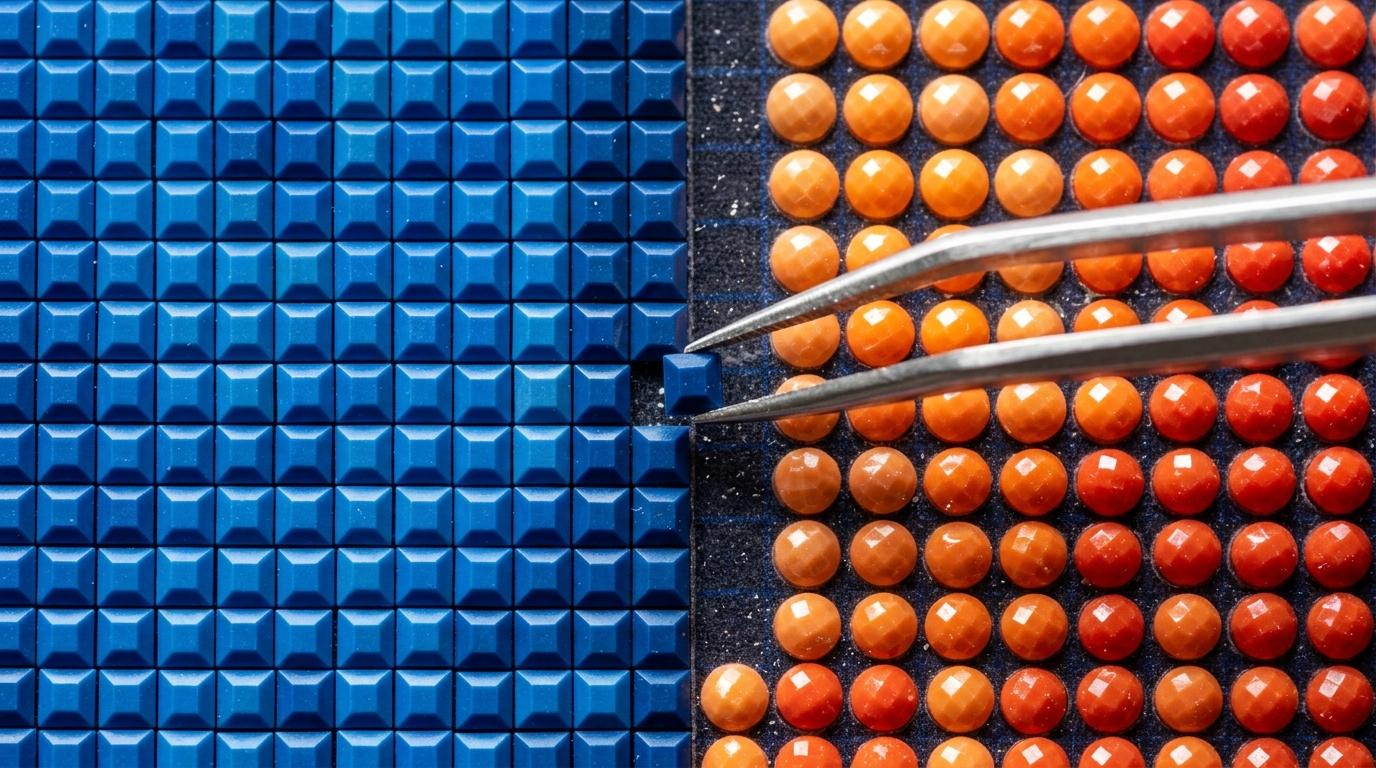
The main difference between square and round diamond painting drills is coverage and ease of placement: square drills (2.5 mm) fit edge-to-edge with zero gaps for higher detail (roughly 26% more drills per area) and a mosaic finish, while round drills (2.8 mm) leave small visible canvas gaps between drills but are faster and significantly easier to place.
Choosing between square and round drills affects your crafting speed, detail sharpness, and how forgiving the canvas is to misaligned placements.
The Core Differences at a Glance#
In the diamond painting community, the choice between Square Drills and Round Drills is the most debated topic. Both have distinct advantages depending on your experience level, patience, and project type:
| Feature | Square Drills | Round Drills |
|---|---|---|
| Drill Size | 2.5 mm × 2.5 mm | 2.8 mm Diameter |
| Canvas Coverage | 100% Full Mosaic (Zero Gaps) | ~85% Coverage (Small canvas gaps) |
| Detail Density | 16 drills/cm² | 12.7 drills/cm² |
| Placement Difficulty | Intermediate to Advanced | Beginner-Friendly |
| Alignment Tolerance | Strict (Must align straight) | High (Rotation doesn't matter) |
| Acoustic Satisfaction | Iconic "Click" / "Snap" | Soft tactile touch |
| Best For | Photorealism, text, crisp lines | Mandalas, relaxing speed-drilling |
Deep Dive: Square Drills (2.5mm)#
Why Crafters Love Square Drills:
- Flawless Full Coverage: Because squares tile without empty space, none of the underlying printed canvas is visible once complete.
- Sharper Geometric Lines: If your pattern contains architectural angles, text, or intricate facial contours, square drills preserve straight edges much better.
- The Addictive "Click": When placing a square drill between four already placed drills, it snaps into position with an intensely satisfying acoustic and tactile pop.
Considerations:
- Requires straight alignment. A crooked drill in row 3 can cause row 10 to shift out of alignment if not corrected with a straightener tool or tweezers.
- Slightly slower to complete for beginners. Test sizing using our Diamond Painting Canvas Size Guide.
Turn your own photo into a diamond painting chart
Upload any photo, match 480+ official DMC colors, compare round & square drills, and preview high-res detail in your browser.
Deep Dive: Round Drills (2.8mm)#
Why Crafters Love Round Drills:
- Stress-Free Placement: Because circles are rotationally symmetrical, you can drop a round drill onto the canvas at any angle without checking its orientation.
- Speed & Multi-Placing: Applying 4, 6, or 9 drills simultaneously with a multi-placer pen is drastically easier with round drills.
- Relaxing & Meditative: Perfect for watching TV or unwinding after a long workday with zero alignment stress.
Considerations:
- The tiny triangular gaps between circular drills expose small portions of the adhesive canvas background.
- Requires slightly larger canvas sizes for equivalent image clarity.
Sparkle & Facet Reflections Compared#
Both drill shapes are crafted from cut resin or acrylic facets that catch the light:
- Round Drills typically have 26 facets angled outward in a dome, creating a multi-directional shimmering sparkle resembling gemstones.
- Square Drills feature 9 to 13 wider planar facets, producing bold, reflective flashes of light across uniform mosaic surfaces.
For color shading, see our DMC Diamond Painting Color Chart.
The Verdict: How to Choose for Your Next Project#
Choose **Square Drills** if:
- You are turning a high-detail personal photo, pet portrait, or landscape into diamond art.
- You want the highest possible resolution per square inch.
- You enjoy precise, orderly crafting and the tactile "snap".
Choose **Round Drills** if:
- You are new to diamond painting.
- You want a fast, therapeutic, and relaxed crafting session.
- You are working on abstract designs, mandalas, or large color-blocked backgrounds.
Ready to turn your photo into a diamond painting?
Upload any photo and get a printable pattern with exact colors and drill counts, free to try.
Free preview in your browser · No account or download needed
Frequently Asked Questions
Can I mix square and round drills on the same canvas?+
Generally no, because square drills are 2.5mm and round drills are 2.8mm. The mismatched cell grids would throw off alignment.
Does DrillGrid change the grid size when I switch drill shapes?+
Yes! DrillGrid dynamically recalculates grid counts, drill spacing, and multi-page print tiling depending on whether you choose 2.5mm Square or 2.8mm Round mode.
Continue Reading
More diamond painting guides, DMC color tools, and sizing formulas.
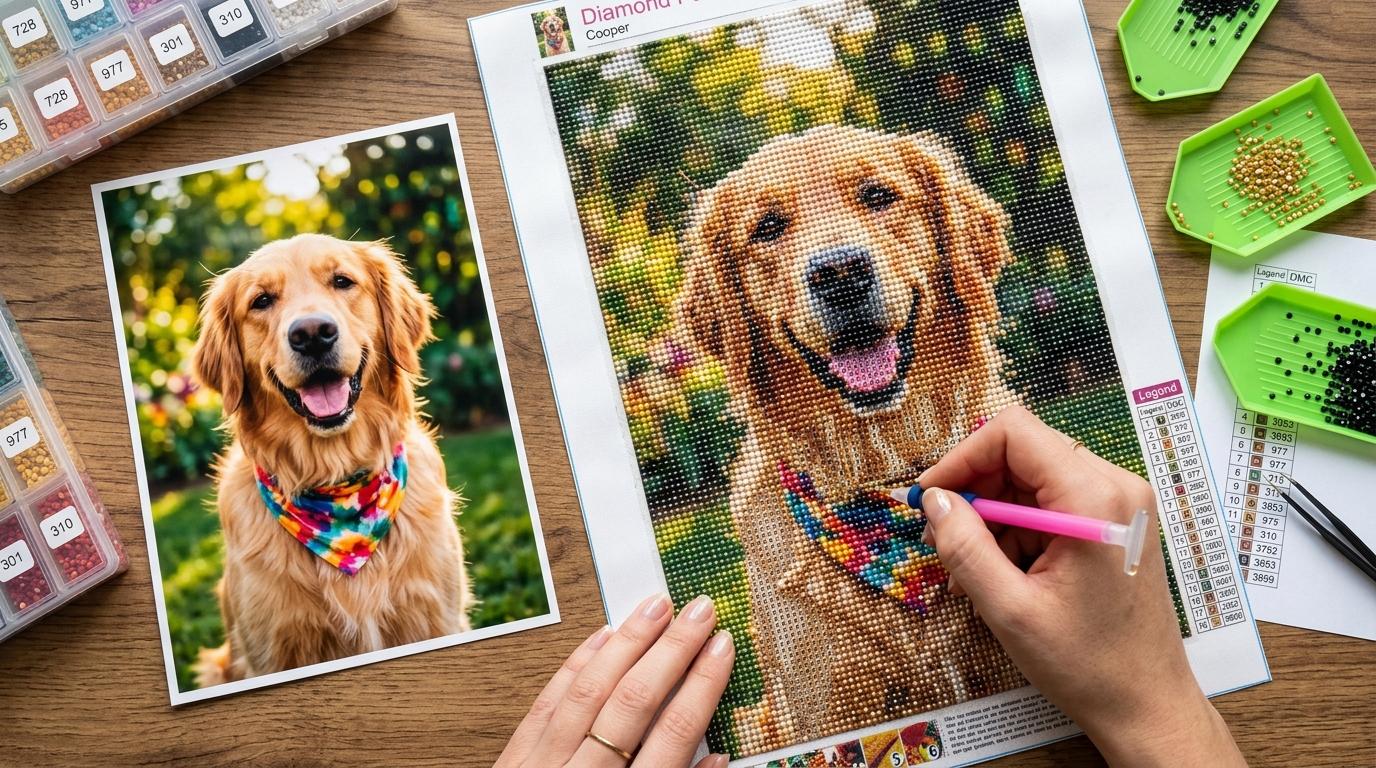
How to Turn Any Photo into a Custom Diamond Painting Chart (Step-by-Step)
Learn how to turn any personal photo, pet picture, or artwork into a print-ready diamond painting chart with exact DMC colors.
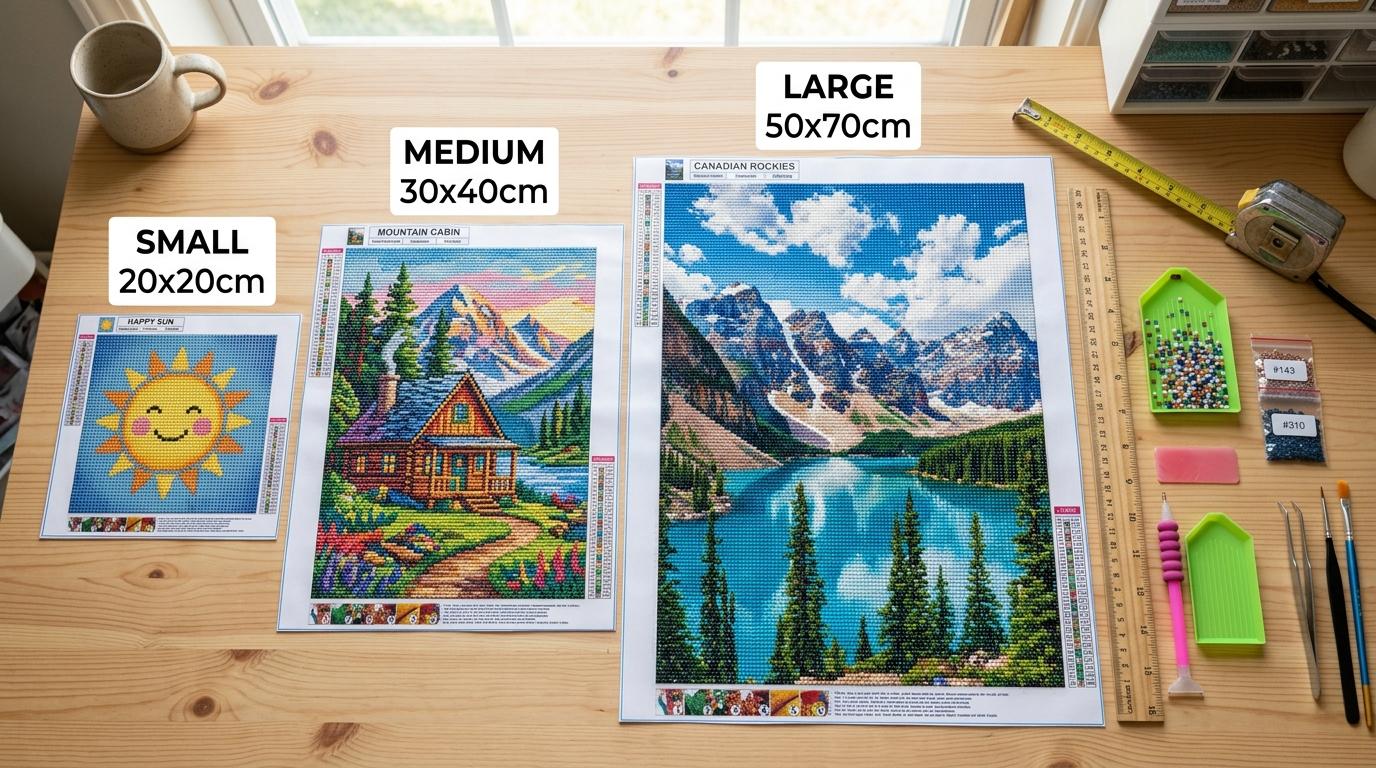
Diamond Painting Sizes: Complete Canvas Size Chart & Guide
The complete guide to diamond painting sizes. Compare standard canvas dimensions in cm and inches, drill counts, frame sizes, and detail scores.
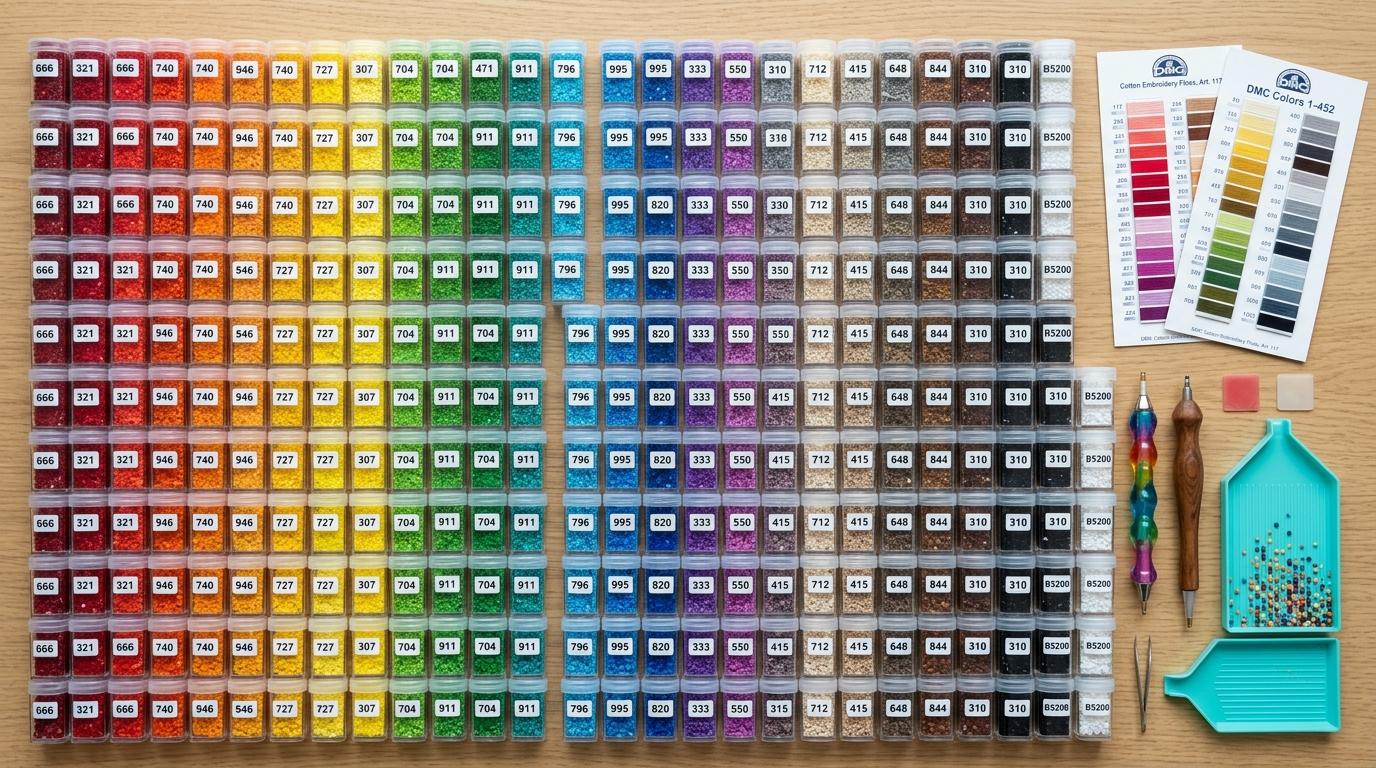
DMC Drill Color Chart: Diamond Art Drill Color Lookup & Swatches
Search 480+ official shades with our interactive DMC drill color chart, complete with hex codes, RGB values, color families, and CSV download.