Diamond Painting vs. Cross Stitch vs. Paint by Numbers: Which Craft Is Best?
Comparing three of the world’s most popular meditative DIY crafts. Discover differences in learning curve, mess, DMC color systems, completion speed, and costs.
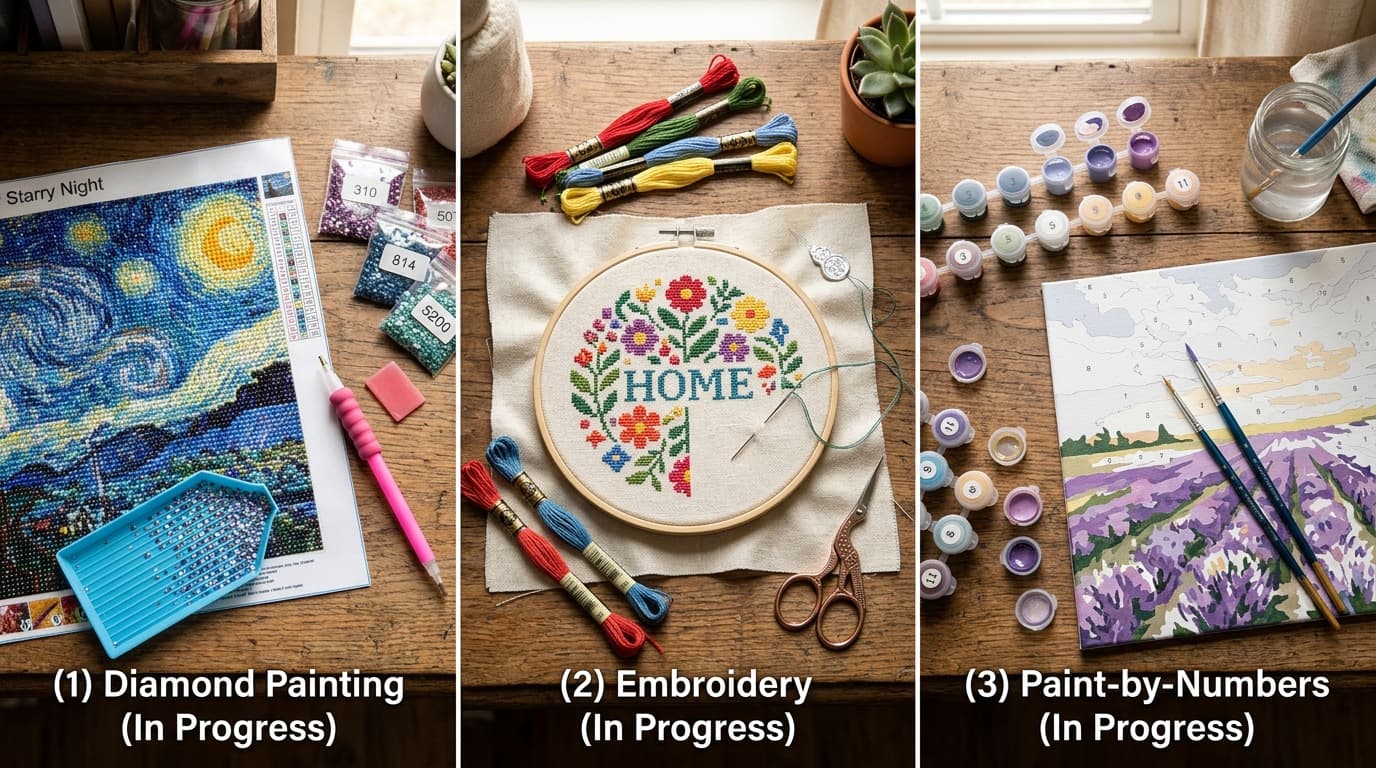
At a Glance
Key findings and core takeaways from our testing and hands-on crafting experience.
When you want to unplug from glowing smartphone screens, quiet your racing mind, and create something tangible with your own two hands, three meditative crafts dominate the creative world: Diamond Painting, Cross Stitch, and Paint by Numbers (PBN).
All three promise stress relief, mindfulness, and a gorgeous finished masterpiece. Yet they feel completely different in practice: one uses needles and thread, one uses wet acrylics and fine brushes, and one uses faceted resin gems and sticky canvas.
If you are trying to decide which hobby deserves your precious free time—or if you already love cross stitch and are curious about diamond art—here is the ultimate head-to-head comparison.
The Big Three Mindful Crafts at a Glance#
- Diamond Painting: A modern hybrid of mosaic art and cross stitch. You apply color-coded faceted resin drills (2.5 mm or 2.8 mm) onto a pre-glued adhesive canvas using a stylus pen.
- Counted Cross Stitch: A centuries-old needlework tradition. You stitch tiny X-shaped embroidery floss crosses onto woven Aida fabric, counting squares on a paper chart.
- Paint by Numbers: A vintage painting method where an uncolored canvas is divided into numbered shapes, which you fill with matching acrylic paint pots.
Head-to-Head Comparison Matrix#
| Feature | Diamond Painting | Counted Cross Stitch | Paint by Numbers |
|---|---|---|---|
| Learning Curve | Extremely Easy (1 minute) | Moderate (counting & tension) | Easy (basic brush skills) |
| Mess & Cleanup | Zero Mess (100% dry) | Zero Mess (thread scraps) | Moderate to High (water, wet paint) |
| Speed (cm² / hour) | Fast (~40–80 cm²/hr) | Slow (~10–20 cm²/hr) | Moderate (~25–45 cm²/hr) |
| Mistake Forgiveness | High (peel drill with tweezers) | Low (must unstitch thread) | High (paint over dried mistakes) |
| Color Standard | DMC Universal Numbers | DMC Universal Numbers | Custom proprietary paint numbers |
| Can Pause Instantly? | Yes (replace cover paper) | Yes (park needle) | No (brushes dry out, paint skins) |
| Finished Texture | 3D Sparkling Facets | Textured fabric & thread | Smooth matte/satin acrylic paint |
| Average Kit Cost | $12 – $40 | $15 – $45 | $15 – $35 |
Turn your own photo into a diamond painting chart
Upload any photo, match 480+ official DMC colors, compare round & square drills, and preview high-res detail in your browser.
The Secret DMC Connection: Cross Stitch Meets Diamond Art#
Many crafters don't realize that diamond painting and cross stitch are biological siblings:
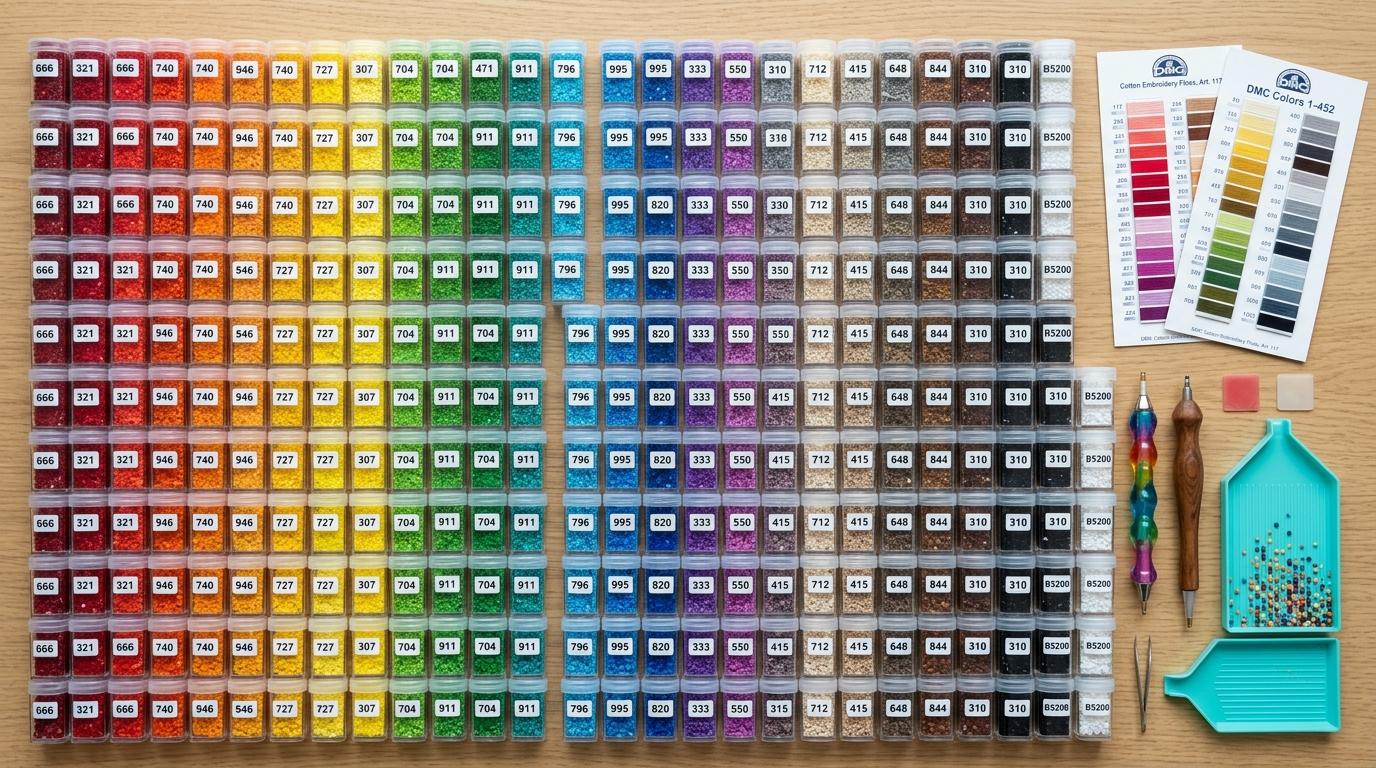
Both crafts rely on the exact same universal color standard: DMC (Dollfus-Mieg & Compagnie) color numbers.
- If you need a deep rich black in cross stitch, you buy DMC 310 six-strand cotton floss.
- If you need that exact same black in diamond painting, you use DMC 310 square or round resin drills.
- DMC 666 is universally Bright Christmas Red, DMC 5200 is pure Snow White, and DMC 700 is Christmas Green in both hobbies!
Mess, Cleanup & Portability: The Living Room Test#
Can you do this craft on the couch while watching Netflix or while your cat curls up next to you?
1. Diamond Painting (Winner for Convenience)
Diamond painting is 100% dry. There is no water cup to tip over, no wet paint that stains couch cushions, and no sharp needles to lose in the rug. If you need to stop unexpectedly to tend to a child or answer the door, simply flip the release paper back over your section. You can walk away for two minutes or two months without anything drying out or spoiling.
2. Cross Stitch (Winner for Pure Portability)
Cross stitch requires no flat table. A small wooden hoop, a needle, and a few bobbins of thread fit in a purse. You can stitch on airplanes, in waiting rooms, and on road trips with zero setup.
3. Paint by Numbers (Highest Friction)
Paint by numbers requires a dedicated flat workspace, a cup of water, paper towels, and careful brush washing between colors. The miniature paint pots can dry out if left cracked open, and you cannot stop mid-stroke without washing your brush to prevent acrylic paint from hardening in the bristles.
Learning Curve & Mistake Forgiveness#
What happens when you accidentally place the wrong color?
- In Diamond Painting: You simply pick up a pair of tweezers, pop the wrong drill off the sticky adhesive, and press the correct color in its place. The canvas glue remains completely intact.
- In Cross Stitch: Placing a stitch in the wrong grid hole throws off your entire count. You have to "frog" (rip out stitches one by one with a seam ripper), which can fray the Aida fabric and waste precious embroidery floss.
- In Paint by Numbers: If you paint the wrong number, you must wait for the acrylic layer to dry completely, then apply 2 to 3 opaque coats of the correct color to hide the dark mistake beneath.
Finished Aesthetic: 3D Sparkle vs. Thread vs. Paint#
The final result is where personal taste shines:
- Diamond Painting: Catches light dynamically. As sunlight or evening lamps move across the room, thousands of 5D resin facets shimmer and sparkle. It has high visual drama and modern luxury appeal.
- Cross Stitch: Produces an understated, timeless heirloom quality. The soft matte cotton texture feels warm, traditional, and nostalgic.
- Paint by Numbers: Looks like classic canvas wall art. From 5 feet away, a well-blended paint-by-numbers piece resembles a genuine acrylic or oil painting.
The Verdict: Which Craft Should You Choose?#
Choose Diamond Painting if:
- You want instant stress relief without complex rules, counting, or knotting.
- You love vibrant sparkle, gemstones, and modern visual pop.
- You want a zero-mess craft you can start and stop in 10 seconds on the sofa.
- You want to turn personal family or pet photos into custom art without painting skills.
Choose Cross Stitch if:
- You enjoy detailed arithmetic, counting, and meticulous historic textile traditions.
- You need a compact project you can stitch on public transit or while traveling.
- You prefer soft, natural matte cotton textiles over glossy resin.
Choose Paint by Numbers if:
- You want the traditional look of an acrylic fine art canvas on your wall.
- You enjoy the sensory feel of wet paint blending across textured canvas boards.
- You have a dedicated craft desk where you can leave water jars and palettes out.
Frequently Asked Questions#
Is diamond painting easier than cross stitch?
Yes, significantly easier. In counted cross stitch, you must calculate stitches on blank Aida fabric, manage thread tension, thread needles, and tie off knots. In diamond painting, symbols are pre-printed directly onto sticky canvas—you simply dip the pen in wax and place the matching bead.
Can you use cross stitch patterns for diamond painting?
Yes! Because both crafts operate on a square grid and use the exact same international DMC embroidery color numbers, any cross stitch chart can be converted into a diamond painting pattern. Tools like DrillGrid make it easy to preview and print 1:1 scale charts.
Why do diamond paintings finish faster than cross stitch?
Placing a diamond drill takes about 2 to 3 seconds with a stylus pen (and under 1 second with a multi-placer). In cross stitch, threading a needle, pulling floss through both sides of the fabric, and securing the back takes 10 to 15 seconds per cross.
Ready to turn your photo into a diamond painting?
Upload any photo and get a printable pattern with exact colors and drill counts, free to try.
Free preview in your browser · No account or download needed
Frequently Asked Questions
Is diamond painting easier than cross stitch?+
Yes. Diamond painting requires no counting, knotting, or threading. The symbols are printed directly onto an adhesive canvas, allowing anyone to start placing gems within 60 seconds with zero prior experience.
Do diamond painting and cross stitch use the same DMC colors?+
Yes! Both hobbies use the exact same international DMC color code standard (e.g., DMC 310 is Black, DMC 666 is Bright Red). This means cross stitch charts map directly to diamond painting drills.
Which craft makes less mess: paint by numbers or diamond art?+
Diamond painting is completely mess-free because it is 100% dry. Paint by numbers requires water cups, paper towels, brush cleaning, and risks paint spills on furniture and carpets.
How long does diamond painting take compared to cross stitch?+
Diamond painting is typically 3 to 5 times faster than counted cross stitch for a project of identical physical dimensions, especially when using multi-placer drill pens on color-blocked sections.
Continue Reading
More diamond painting guides, DMC color tools, and sizing formulas.
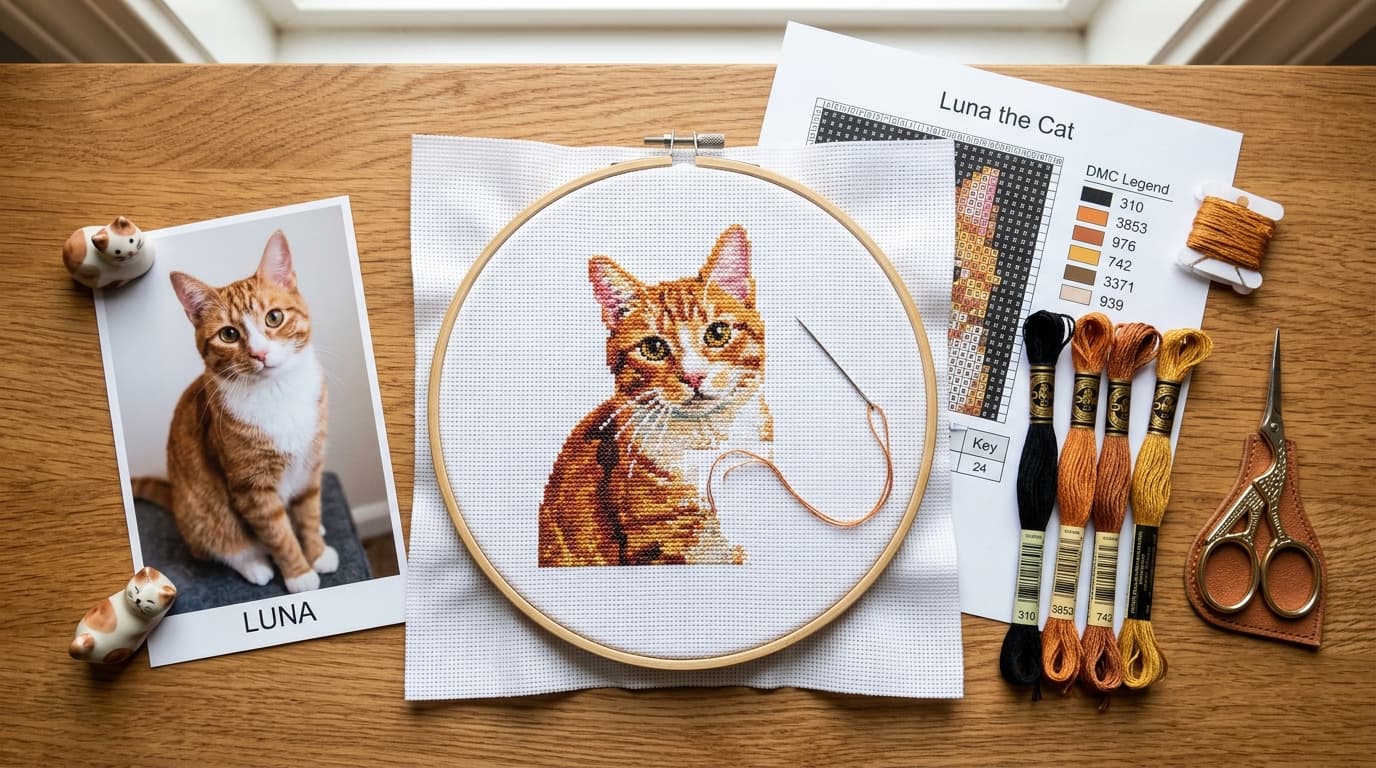
How to Turn Any Photo Into a Cross Stitch Pattern (Without Muddy Colors)
Learn how to turn any photo into a counted cross stitch pattern with accurate DMC floss colors, 10x10 counting grids, and readable chart symbols.
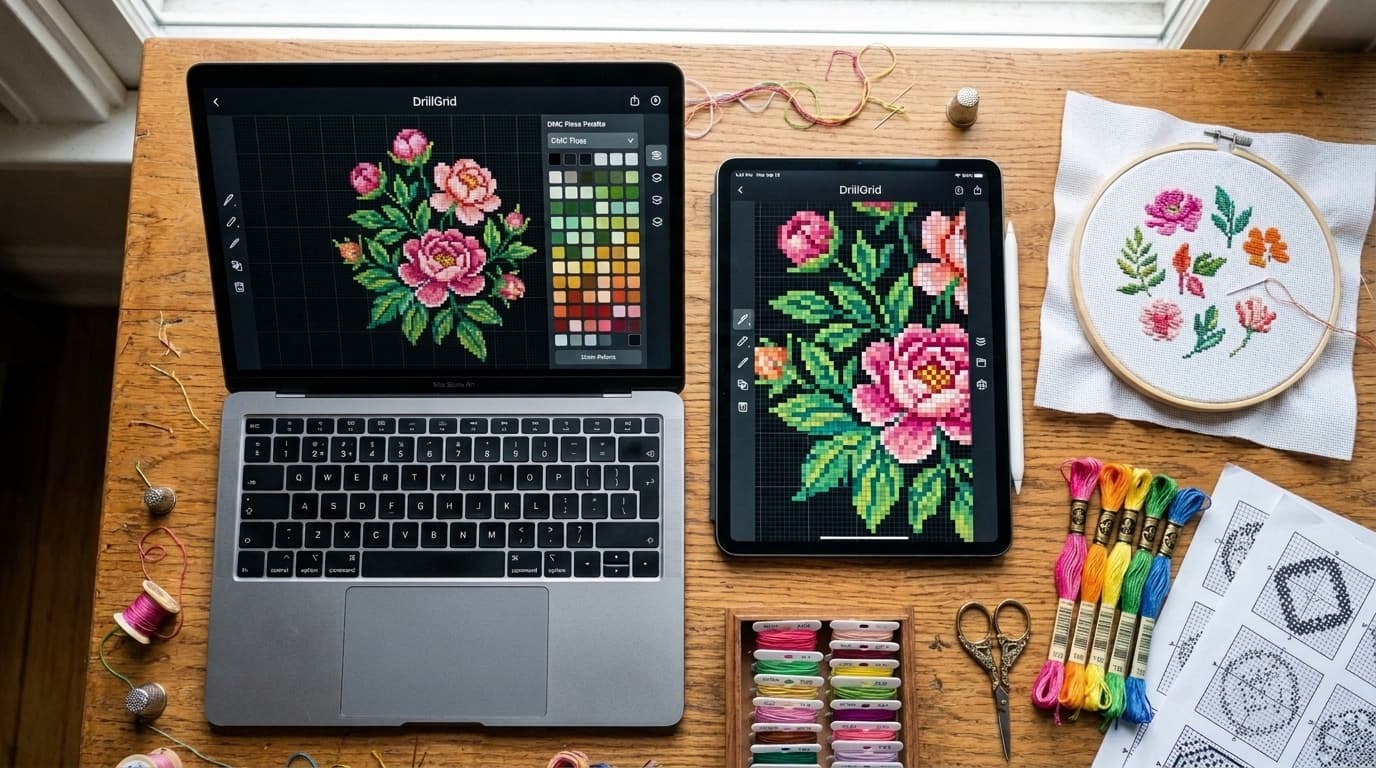
Best Cross Stitch Pattern Makers for Mac, iPad & iPhone (2026 Guide)
Compare the best cross stitch pattern makers for Mac, iPad, and iPhone in 2026. Review DMC color accuracy, PDF chart exports, floss stash tools, and pricing.
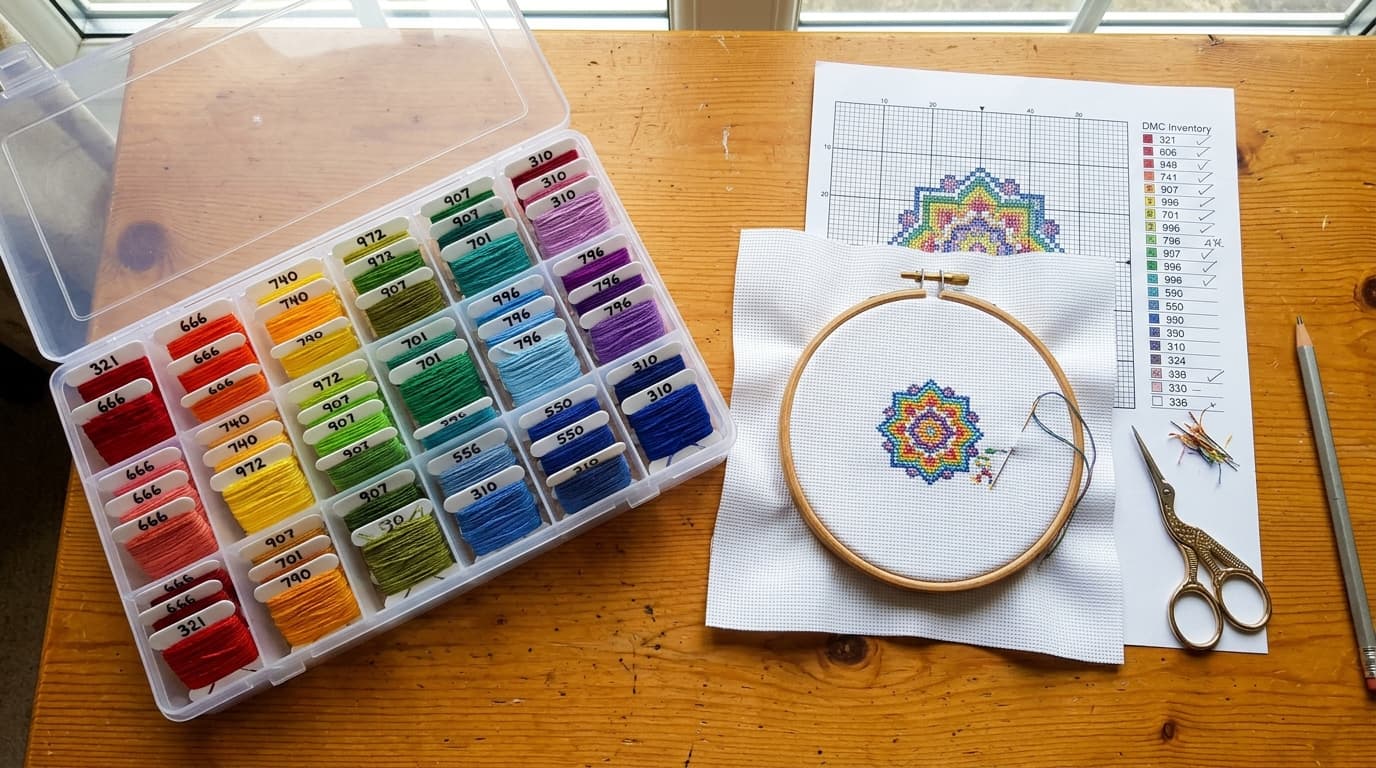
How to Make Custom Cross Stitch Patterns From Your Leftover DMC Floss Stash
Turn leftover DMC embroidery floss into custom cross stitch patterns. Match any photo to your existing bobbin stash and buy only missing skeins.
DMC Drill Color Chart: Diamond Art Drill Color Lookup & Swatches
Search 480+ official shades with our interactive DMC drill color chart, complete with hex codes, RGB values, color families, and CSV download.