Custom Pet Portrait Diamond Painting: The Complete Guide
Everything you need to turn your favourite pet photo into a stunning, frame-worthy diamond painting: from choosing the right photo to picking the perfect canvas size.
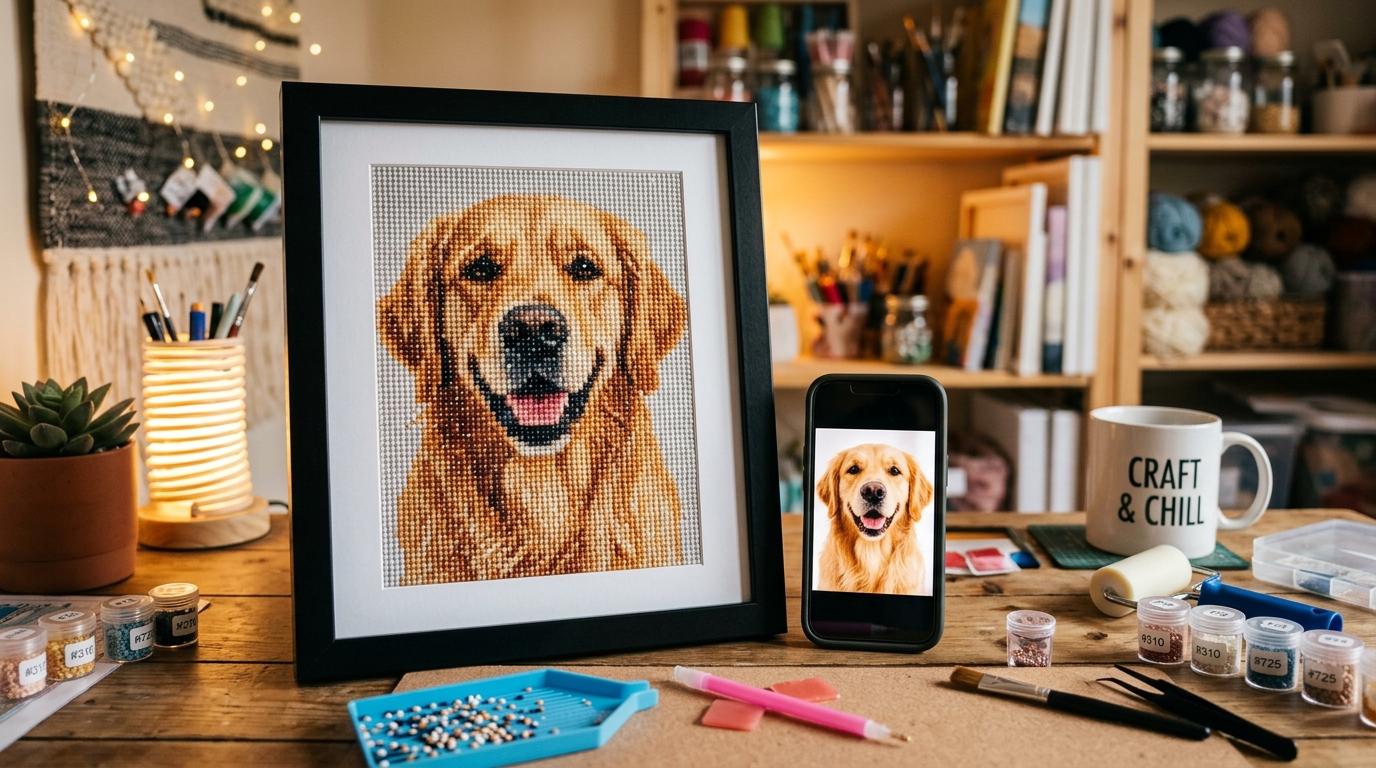
At a Glance
Key findings and core takeaways from our testing and hands-on crafting experience.
Of all the things people turn into custom diamond paintings, pets are by far the most popular, and for good reason. A shimmering, gem-covered portrait of your dog, cat, rabbit, or horse is one of the most personal, heartfelt pieces of art you can create or gift.
This guide covers everything: picking the right photo, choosing the right canvas, and using DrillGrid to get the most accurate, gorgeous result possible.
Why Pet Portraits Make the Best Diamond Paintings#
Pets are perfect subjects for diamond art for a few key reasons:
- Rich colour variation: Fur coats (whether tabby stripes, golden retriever waves, or husky patches) are naturally made of subtle colour gradients that translate beautifully into thousands of tiny coloured gems.
- Strong focal points: A pet's eyes, nose, and mouth create natural highlights that pop brilliantly when rendered in sparkling drills.
- Emotional value: A diamond painting of a beloved pet, especially one who has passed, becomes a treasured keepsake unlike any other. Many crafters specifically create these as memorials or gifts.
- Forgiving composition: Unlike group photos with multiple faces that all need space, a solo pet portrait lets you dedicate every single drill to one subject.
Choosing the Perfect Pet Photo#
Your finished diamond painting is only as good as the photo you start with. This is where most people go wrong.
What makes a great pet photo for diamond painting:
✅ DO use:
- Close-up shots: fill the frame with your pet's face. Get within 1–2 feet if you can.
- Natural light: photos taken near a window or outdoors in soft daylight show the richest fur colours.
- Sharp focus on the eyes: a pet portrait lives or dies by whether the eyes are sharp and expressive.
- Simple or blurred backgrounds: a background that competes with your pet steals drills from the main subject.
- High contrast between pet and background: a golden dog against a white wall is far easier to render than a tabby cat against a wooden floor.
❌ AVOID:
- Flash photography: it creates harsh shadows, washes out colours, and produces flat results.
- Motion blur: even slight blur on the face translates to muddy, unreadable drills.
- Backlit photos: when the pet is darker than the background, fur detail disappears.
- Long-distance shots: if your pet is smaller than one-third of the frame, there is not enough drill resolution for detail.
The easiest trick: get down to your pet's level
Most pet photos are taken from standing height, looking down. Get down to your pet's eye level, call their name, and capture them looking straight at the camera. This angle gives the most expressive, frame-worthy portraits.
Turn your own photo into a diamond painting chart
Upload any photo, match 480+ official DMC colors, compare round & square drills, and preview high-res detail in your browser.
Picking the Right Canvas Size for Your Pet#
Canvas size determines drill resolution: the more drills, the sharper and more detailed your portrait will look. Here's a quick guide specific to pet portraits:
| What You're Capturing | Minimum Size | Ideal Size |
|---|---|---|
| Close-up face (head and neck only) | 25×25 cm | 30×30 cm |
| Head, shoulders, and front paws | 30×30 cm | 30×40 cm |
| Full-body sitting pet | 30×40 cm | 40×50 cm |
| Full-body with background / two pets | 40×50 cm | 50×60 cm |
| Memorial piece / statement wall art | 50×60 cm | 50×70 cm |
Use the canvas size calculator to preview exactly how your pet photo will look at each size before you decide.
Square vs. Round Drills for Pet Portraits#
For pet portraits specifically, square drills are strongly recommended. Here's why:
| Feature | Square Drills | Round Drills |
|---|---|---|
| Detail per cm | 4 drills/cm | ~3.6 drills/cm |
| Fur texture rendering | ⭐⭐⭐⭐⭐ Excellent | ⭐⭐⭐ Good |
| Colour gradient accuracy | Very sharp transitions | Softer, slightly dotty |
| Gap between drills | None (tiles tile perfectly) | Small gaps between circles |
| Ease of placement | Medium | Easy |
| Best for | Portraits, detailed fur | Beginners, casual projects |
The tight, gapless grid of square drills means that subtle colour transitions in fur (from cream to gold to auburn in a retriever, or charcoal to silver in a shorthair) render with accuracy and richness that round drills simply can't match.
How DrillGrid Converts Your Pet Photo#
When you upload your photo to DrillGrid, here's what happens behind the scenes:
- Image analysis: DrillGrid analyses your photo's colours and detail map.
- Colour reduction: Your photo's millions of colours are intelligently reduced to a curated palette of DMC thread colours, the same numbering system used by diamond painting manufacturers worldwide. The algorithm is specifically optimised for natural tones (fur, skin, eyes) to keep colour accuracy high.
- Grid generation: The photo is mapped onto your chosen canvas grid, with each cell assigned a DMC colour number and a symbol for your legend.
- Preview rendering: You see a drill-by-drill preview of exactly what your finished painting will look like before you export.
- Export: Download a 1:1 PDF for home printing, a vector EPS for professional printing, or an Ultra HD PNG for reference.
Tips for Placing Drills on a Pet Portrait#
Once you have your canvas ready, here are some techniques that experienced crafters use specifically for pet portraits:
Work background-to-foreground
Start with the background (usually sky, floor, or blur) and work forward to the pet itself. This way you always have a clear view of the most important areas (the face and eyes) when you get to them.
Do the eyes last (or at least save them)
Pet eyes are the emotional highlight of the painting. Many crafters save the eyes for last so they can place each drill with extra care and attention. Use a single-drill stylus and press each one down firmly.
Use a light pad
A light pad (a slim LED panel you place under your canvas) illuminates the printed symbols from below, making them much easier to read, especially in areas with dense, dark colours like black fur or deep brown eyes.
Group your DMC colours first
Sort your drills into labelled containers by DMC number before you start. Pet portraits often use many similar earth tones (cream, beige, tan, brown, dark brown) that are easy to mix up under artificial lighting.
Displaying & Gifting Your Pet Portrait#
Framing
30×30 and 30×40 cm canvases fit standard-size picture frames (12×12" and 12×16") available from IKEA, Amazon, or any craft store. For a premium look, choose a deep-set frame with a mat board to give the gems room to shine without pressing against the glass.
Sealing before framing
If you're going frameless, apply a thin layer of diamond art sealer (Mod Podge Dimensional Magic or a dedicated diamond painting sealer) to lock the drills permanently in place. Let it dry flat for 24 hours before handling.
Gift ideas
- Pet memorial gifts: A diamond portrait of a passed pet is one of the most meaningful gifts you can give a grieving pet owner.
- Birthday or Christmas gift: Commission the painting in secret using a photo from their social media, then frame it before gifting.
- Matching set: Make the same portrait in two different sizes, one for yourself and one as a gift for a friend.
Ready to turn your photo into a diamond painting?
Upload any photo and get a printable pattern with exact colors and drill counts, free to try.
Free preview in your browser · No account or download needed
Frequently Asked Questions
What type of photo works best for a pet diamond painting?+
A close-up, well-lit photo taken at your pet's eye level with a simple or blurred background. Natural daylight works best; avoid flash, motion blur, or backlit shots. The pet should fill at least half the frame so there are enough drills to show detail.
What canvas size should I use for a dog or cat portrait?+
For a close-up face, 30×30 cm is ideal. For head and shoulders, use 30×40 cm. For a full-body portrait, go with 40×50 cm. The key is ensuring the eye area covers at least 10–15 drills across; anything smaller and the eyes lose expression.
Should I use square or round drills for a pet portrait?+
Square drills are strongly recommended for pet portraits. They pack more drills per centimetre (4 vs 3.6), have no gaps between tiles, and render fur colour gradients with much higher accuracy. Round drills are easier for beginners but sacrifice portrait sharpness.
Can I make a diamond painting as a memorial for my pet?+
Absolutely, pet memorial diamond paintings are one of the most popular projects on DrillGrid. Upload your favourite photo of your pet, choose a larger canvas size (40×50 or 50×60 cm) for maximum detail, and create a keepsake that celebrates their memory in a beautiful, lasting way.
How do I get rid of a busy background in my pet photo?+
Use DrillGrid's built-in crop tool to zoom in tightly around your pet before generating the grid. Removing clutter from the background means every drill goes towards your pet, rather than a busy floor pattern or cluttered room. You can also increase the canvas colour simplification setting to reduce background noise.
How long does a pet portrait diamond painting take to complete?+
A 30×30 cm close-up face (about 14,400 drills) takes most beginners 10–18 hours across several sessions. A 40×50 cm full-body (32,000 drills) typically takes 25–40 hours. Many crafters enjoy the meditative aspect and spread it over 2–4 weeks.
Continue Reading
More diamond painting guides, DMC color tools, and sizing formulas.
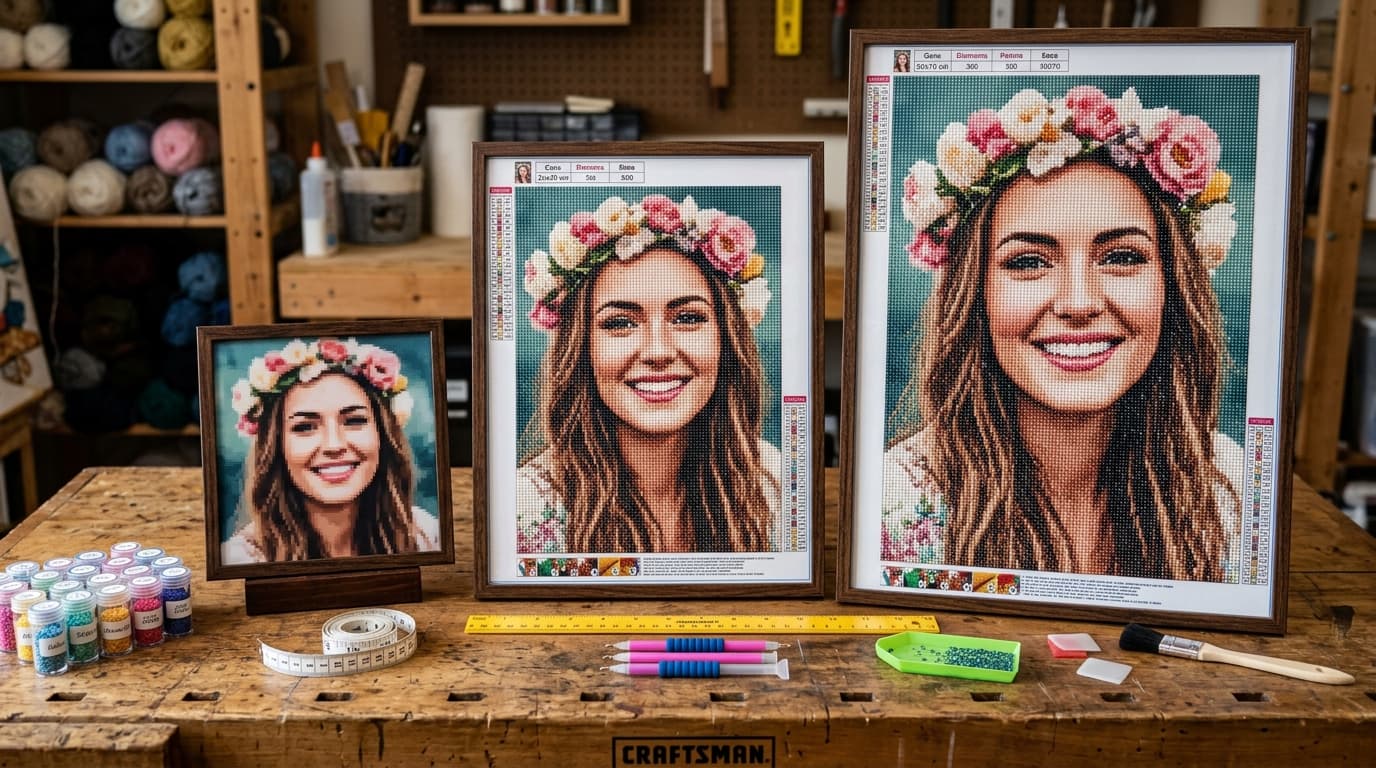
How to Choose the Right Canvas Size for Your Photo (No Guesswork)
Choosing the wrong canvas size is the #1 cause of blurry diamond paintings. Learn how to match any photo to the right dimensions for sharp detail.
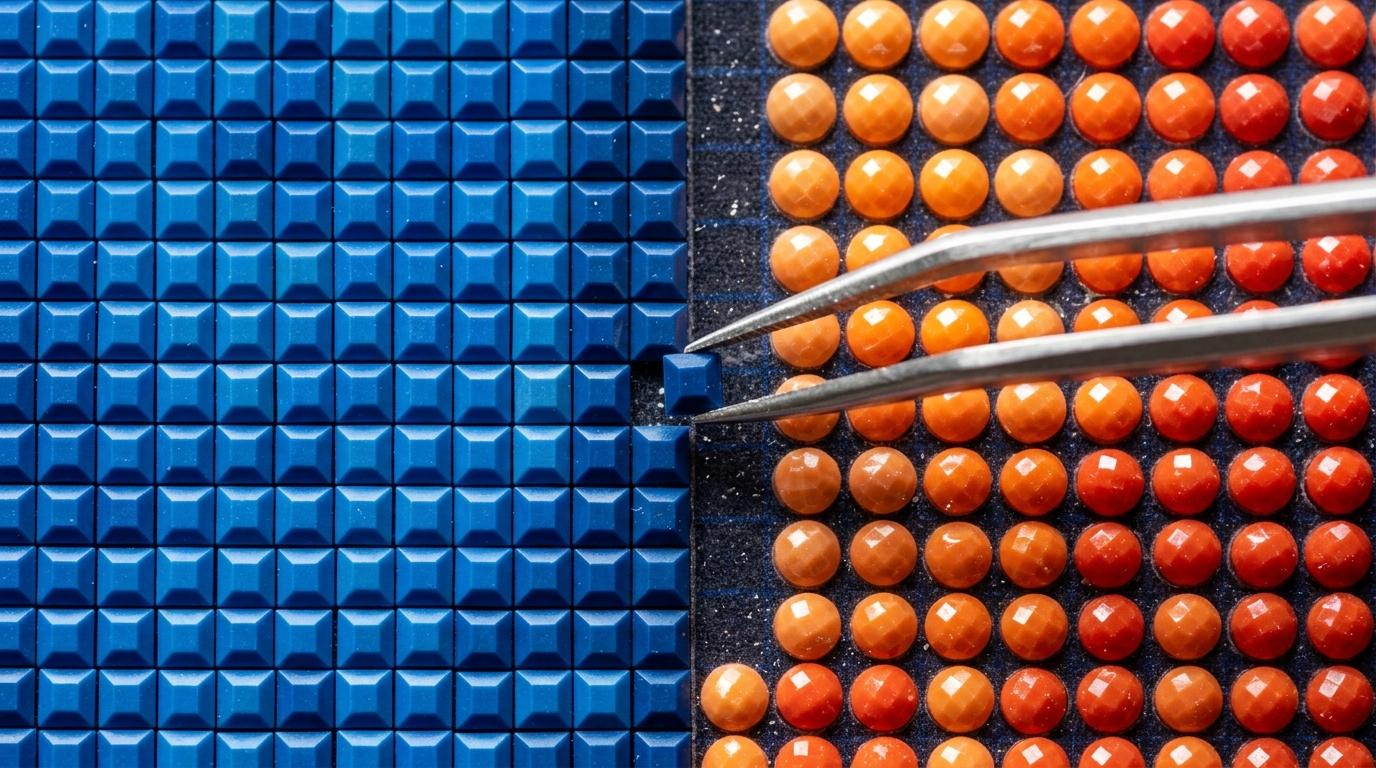
Square vs. Round Diamond Drills: Which Is Right for Your Project?
Square drills or round drills? Compare how each one looks, how easy they are to place, and which is better for your next project.
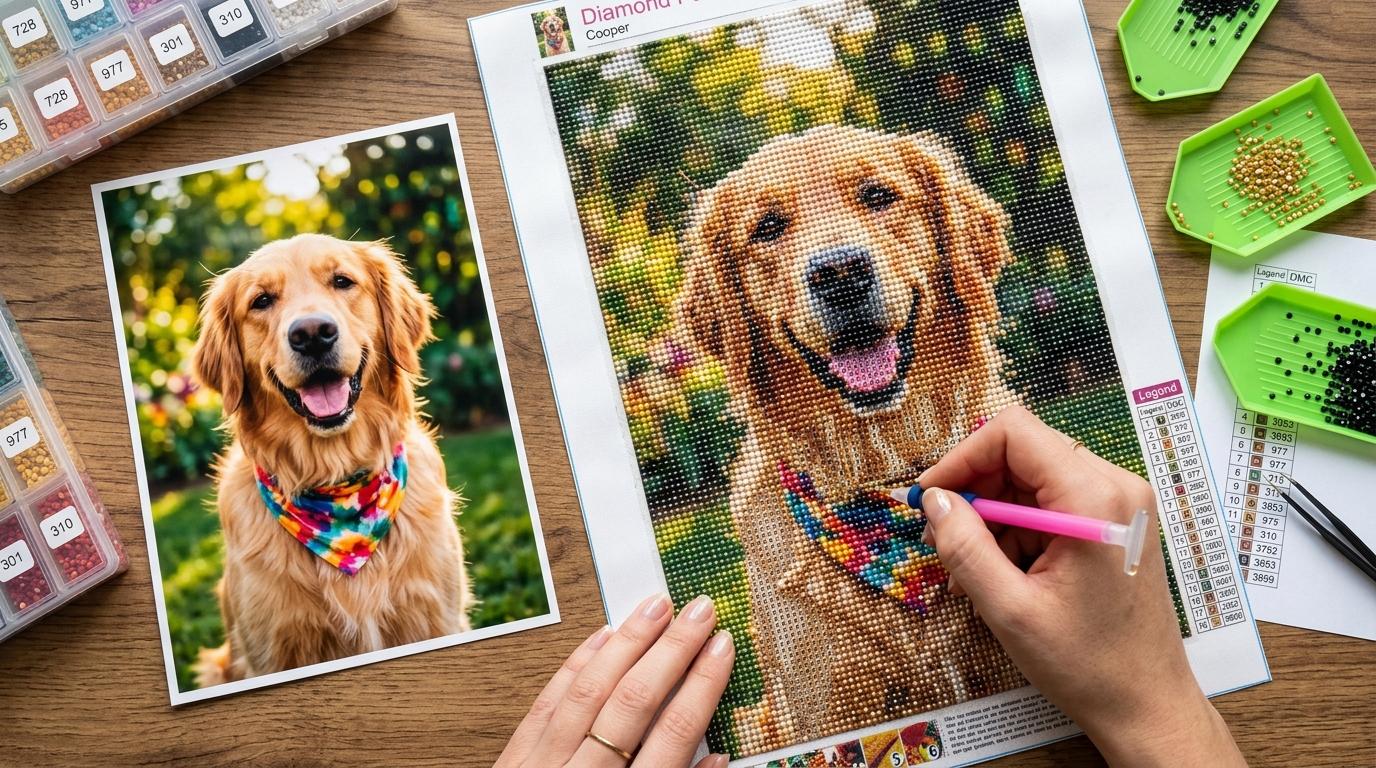
How to Turn Any Photo into a Custom Diamond Painting Chart (Step-by-Step)
Learn how to turn any personal photo, pet picture, or artwork into a print-ready diamond painting chart with exact DMC colors.
Diamond Painting Sizes: Complete Canvas Size Chart & Guide
The complete guide to diamond painting sizes. Compare standard canvas dimensions in cm and inches, drill counts, frame sizes, and detail scores.